Nvidia has now bought three companies without buying any of them
A $6 billion licence, a separate $1 billion investment, and job offers to 109 people. Poolside stays independent — and that, rather than the price, is the part worth understanding.
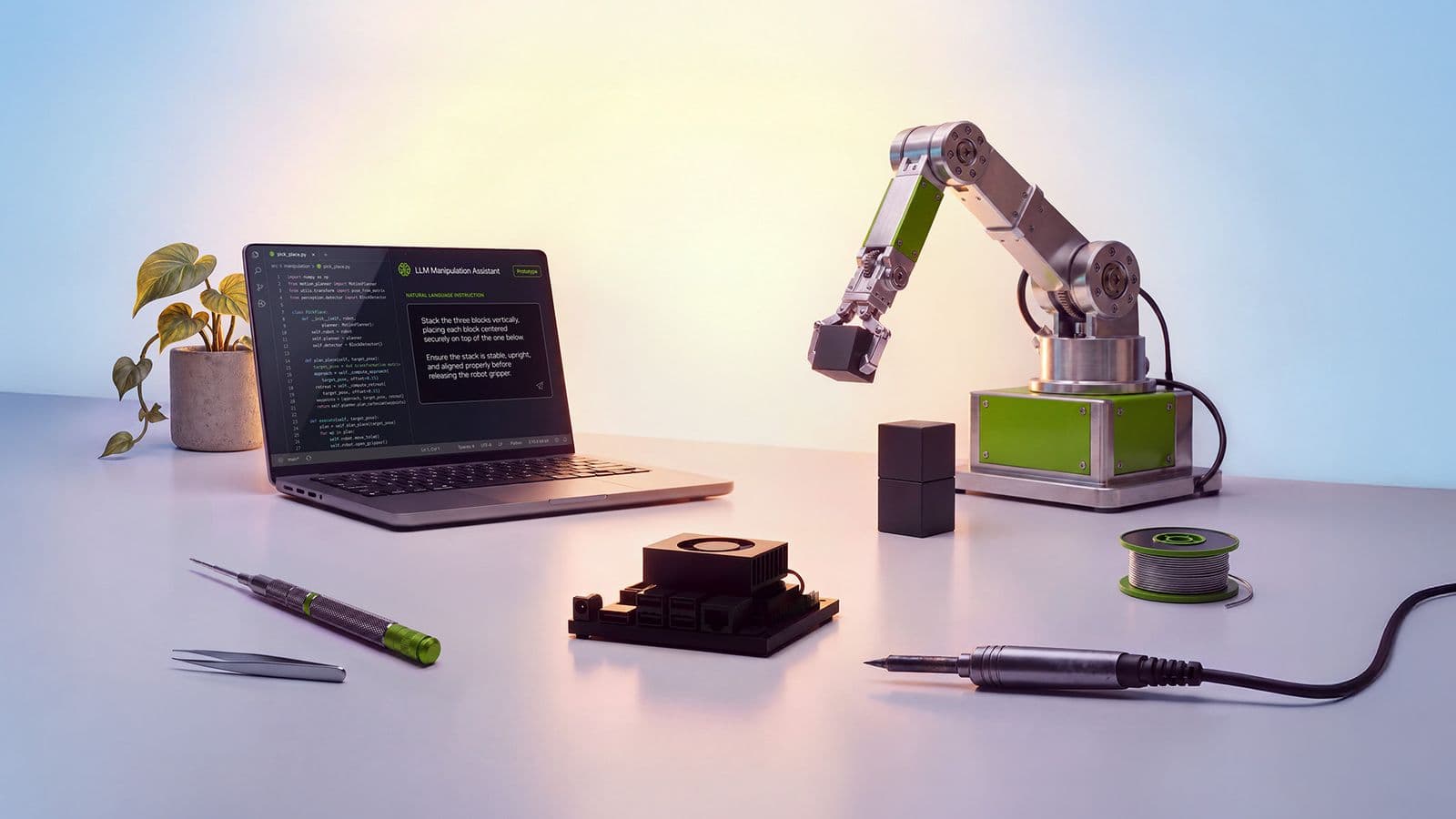
What happened. On 20 August 2026, Bloomberg reported that Nvidia had agreed to pay Poolside roughly $6 billion for a non-exclusive licence to Model Factory, the internal platform Poolside built to produce its open-weight Laguna coding models. Separately, Nvidia is investing about $1 billion in Poolside at a $12 billion pre-money valuation. The two sums are distinct: one buys access to software, the other buys equity.
Nvidia is also extending job offers to 109 Poolside employees who worked on Laguna, who would go on to work on Nemotron, Nvidia’s own open-weight model family.
What is not happening: Nvidia is not buying Poolside. The company continues independently under co-founders Jason Warner, its CEO and formerly GitHub’s chief technology officer, and Eiso Kant, its chief technology officer, who started it in 2023. Because the licence is non-exclusive, Poolside can license the same platform to anyone else. Nvidia has not published terms; the figures come from reporting, not filings.
Why this is not a normal acquisition. In a normal acquisition, a buyer takes the company: its assets, its staff, its liabilities, its future. Here Nvidia takes two of the four things that actually matter — the technology and the people who built it — and leaves the corporate shell standing.
Nvidia’s position is that this is neither an acquisition nor an acquihire, and on the second point the structure genuinely differs from a talent raid. In a talent raid the team leaves and investors are left holding a hollowed-out company. Here roughly $6 billion flows to Poolside itself, so its shareholders are paid, and a further $1 billion arrives as equity at a valuation the deal helps establish. Poolside emerges richer, formally independent, and without the engineers who built its core asset.
The three-deal pattern. This is the third time Nvidia has done something shaped like this in under a year.
| Date | Company | Reported value | Structure |
|---|---|---|---|
| Sept 2025 | Enfabrica | over $900M | Licence to its AI-networking technology, plus hiring CEO Rochan Sankar and staff |
| 24 Dec 2025 | Groq | about $20B | Non-exclusive licence to its inference technology, plus hiring founder Jonathan Ross and others; Groq continues independently |
| 20 Aug 2026 | Poolside | about $6B licence (+$1B investment) | Non-exclusive licence to Model Factory, plus offers to 109 staff; Poolside continues independently |
Nvidia’s three licence-plus-hire deals
Three times, the same architecture: a large licence fee, a hiring wave aimed at the specific team behind the technology, a minority investment or none, and a target that survives on paper. Once is a deal structure. Three times is a playbook.
Why the legal structure matters. Two things need separating here — what the law requires, and what people are arguing about it.
The fact. Under the Hart-Scott-Rodino Act, acquisitions above certain size thresholds must be reported to US antitrust agencies before closing, which gives regulators a window to examine them in advance. Licensing agreements and ordinary hiring are not, as a general matter, subject to that premerger notification requirement.
The analysis. Because of that difference, a transaction assembled from a licence plus hiring can move technology and talent without the advance review an outright purchase would invite — which is why antitrust lawyers have debated this shape since Microsoft’s 2024 arrangement with Inflection, and why commentators have coined “reverse acquihire” for it. Whether any particular deal of this kind is lawful structuring or an improper end-run is unsettled. No court has ruled on it, and nothing here establishes that Nvidia has broken the law.
Regulators are, however, paying attention to the category. In a Bloomberg Podcasts interview on 16 January 2026, FTC Chair Andrew Ferguson said acquihiring had become significant enough that the agency was “beginning to look very closely at how these things work,” including whether such deals should have been reported under HSR, and suggested guidance might follow in the coming months. That is a statement of intent, not an enforcement action. Separately, on 20 March 2026, Senators Elizabeth Warren and Richard Blumenthal wrote to Nvidia CEO Jensen Huang questioning whether the Groq deal had been structured to sidestep antitrust review; a letter is not an investigation.
As of 24 August 2026, neither the FTC nor the DOJ has announced any review of the Poolside transaction, and no other US regulator has announced one.
That is the state of the public record on this date, not a permanent finding.
The word doing the heaviest lifting is “non-exclusive.” A licence that leaves the seller free to license the same technology elsewhere is, on its face, competition-preserving. Whether that freedom is exercised is an empirical question — and a checkable one.
What it means for AI startups and investors. A new exit has appeared between “stay independent” and “get acquired,” and it changes the arithmetic for everyone at the table.
For founders and investors it can be attractive: the company is paid, the valuation is marked, and there is no lengthy review that might collapse the deal. For the buyer it is faster and less exposed. For employees it is more ambiguous — 109 people get Nvidia offers, and the colleagues who remain inherit a company whose defining technology now also runs inside its largest customer and competitor.
The competitive question is whether these companies remain real independent players or become licensing shells. Groq is the natural test case, one deal ahead of Poolside on the same path.
What happens next. Four things worth watching, each verifiable. Whether the FTC issues the acquihire guidance Ferguson floated in January, and what it says about licence-plus-hire structures. Whether either agency opens a review of the Poolside deal — none has been announced. Whether Nvidia runs the play a fourth time. And most telling: whether Poolside ever licenses Model Factory to a second customer. If the non-exclusive licence stays exclusive in practice, the label was doing legal work the substance does not support.
Sources (8)
- Bloomberg: Nvidia to pay Poolside a $6 billion licence, tap startup’s staff, 20 August 2026
- The Information: Nvidia to reportedly pay $6 billion in licensing and hiring deal with Poolside
- The Next Web: Nvidia pays Poolside $6bn to license its model factory and hire 109 staff
- CNBC: Nvidia buying AI chip startup Groq’s assets for about $20 billion, 24 December 2025
- CNBC: Nvidia spent over $900 million to hire Enfabrica’s CEO and license its technology, 18 September 2025
- WilmerHale: FTC eyeing acquihire transactions in tech industry, 30 January 2026
- Letter from Senators Warren and Blumenthal to Nvidia on the Groq deal, 20 March 2026
- Herbert Smith Freehills Kramer: When is a transaction that avoids HSR a transaction for avoidance?
About the author
Muhammad ZahidFounding Editor, BriefLookout
Muhammad Zahid is the founding editor of BriefLookout, an independent publication focused on explaining what happened, what it means, why it matters, and what could happen next. He works across editorial strategy, research, and the systems behind BriefLookout to make complex developments easier to understand.
More from Muhammad Zahid →Related reading
Nvidia is reportedly raising AI server prices 15%. The interesting part is that it has to.
Muhammad Zahid · 25 Aug 2026 · 5 min read
The US now wants a look at powerful AI models before anyone else gets one
Muhammad Zahid · 21 Aug 2026 · 3 min read
The quiet standardization of model context protocols
BriefLookout · 8 Aug 2026 · 6 min read