World · Explainer
What Is the UN General Assembly, and Why Does Brazil Always Speak First?
Every September, world leaders take turns at the same podium in New York. Here's what the General Assembly actually does, how its famous week of speeches works, and why it rarely changes anything on its own.
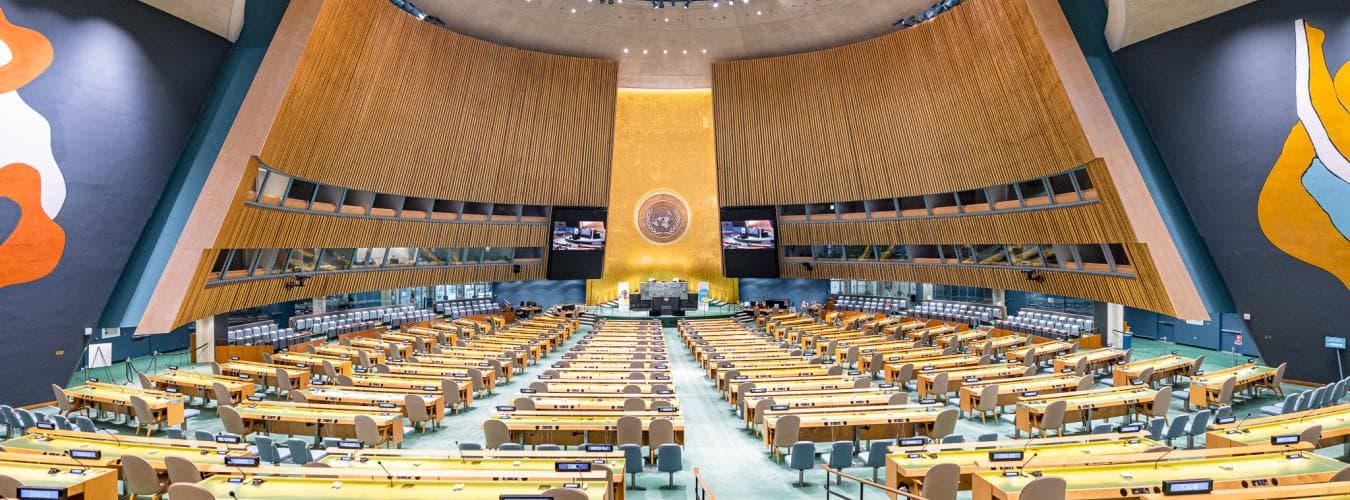
The Basic Idea
The General Assembly is the UN's main policymaking body and includes all 193 member states, each with an equal vote. Created in 1945 under the UN Charter, it serves as the central forum where the full range of international issues is discussed.
What It Can and Can't Do
Some of its decisions are concrete. It approves the UN budget, elects the non-permanent members of the Security Council, and appoints the Secretary-General on the Council's recommendation. Most of its output, though, comes as resolutions, and those resolutions are non-binding; their weight comes from representing the view of the international community. Its main session runs from September to December, with further meetings through the rest of the year as needed.
The Debate That Isn't One
The part that makes headlines is the General Debate each September, when many heads of state travel to New York to address the Assembly. Despite the name, nobody debates. Countries simply take turns giving speeches, with a right of reply when needed. Speeches are usually written in advance, often back in national capitals, and delegates can't interrupt a speaker to question or challenge them. Leaders are asked to stay under 15 minutes, but many run well over; Fidel Castro holds the record with a four-and-a-half-hour speech in 1960, though that wasn't during the General Debate.
Why Brazil Always Goes First
According to the UN's protocol office, in the organization's early years nobody wanted to speak first, Brazil went first several times, and it became tradition. The US speaks second as host country, and the rest of the order is set by a formula weighing level of representation, geographic balance, and when each country requested its slot.
This Year's Session
The 81st session opened on September 8, 2026, and this year's General Debate runs from September 22 to 28 under the theme "Restoring Trust, Managing Transformation: A United Nations That Delivers for All." This week's speeches show why the forum still draws attention. Trump told the Assembly he would "annihilate" Iran if its leaders don't make a deal, and Iranian President Masoud Pezeshkian responded that Iran won't pursue nuclear weapons but has a right to peaceful nuclear technology. Venezuela's acting president, in her first UN address since taking power, promised elections. None of these speeches changes anything by itself, but it's one of the few moments each year when every country's leadership states its position publicly, to everyone, at once.
Sources (3)
Related reading
Canada didn't just retaliate. It copied the tariff schedule line by line.
BriefLookout · 25 Aug 2026 · 4 min read
Why three governments just froze the same shipping lane
BriefLookout · 10 Aug 2026 · 5 min read
The quiet return of border checks across the Baltic
BriefLookout · 6 Aug 2026 · 6 min read