The Treasury tried to steady the bond market. The move lasted a day.
On 19 August the Treasury doubled its buybacks of long-dated debt and the 30-year yield fell 15 basis points. Within 24 hours the entire move was gone. The reason lies in what a buyback actually does — which is not what most of the coverage implied.
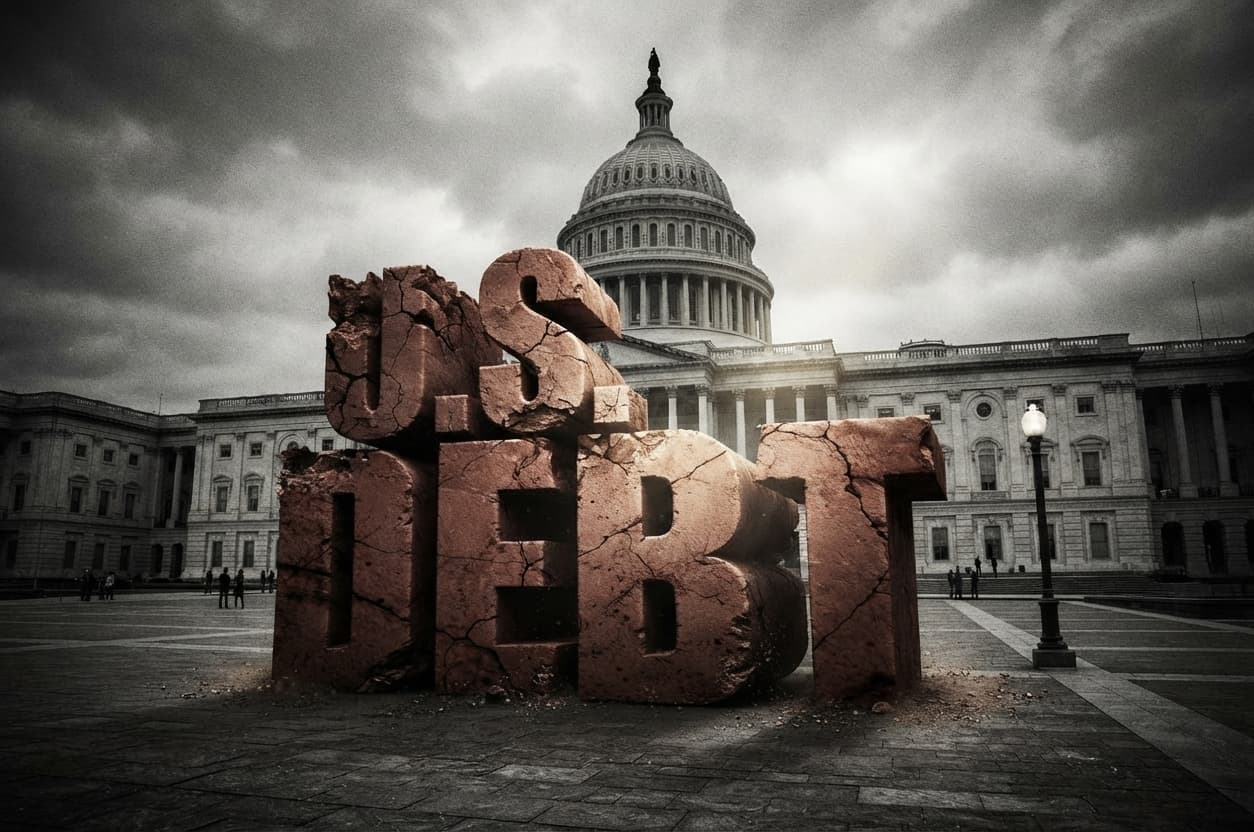
What happened. On Monday 17 August the 30-year Treasury yield topped 5.31%. On Tuesday it reached 5.33% and touched 5.34% intraday — its highest level since June 2007. On Wednesday 19 August the Treasury announced it was increasing, by at least double, the size of its liquidity support buyback operations for longer-dated nominal coupon securities: from a maximum of $2 billion per operation to at least $4 billion, covering the 10-to-20-year and 20-to-30-year sectors, effective 9 September and running through 4 November. The 30-year yield fell to 5.19% — 9 basis points on the day, and about 15 off Tuesday's peak. By Thursday the decline had been fully reversed. Yields rose again on Friday.
What a Treasury buyback actually is. The Treasury offers to repurchase bonds it has already issued, and it pays for them by issuing other debt. That last clause carries the weight.
Three quantities are easy to conflate. Gross issuance is how much new debt the Treasury sells. Net supply is how much government debt the market ends up holding in total. Demand is investors' appetite to hold it. A buyback moves gross issuance around — the Treasury must sell something new to fund the repurchase — while leaving net supply essentially unchanged. The government's borrowing requirement is set by the deficit, and a buyback does not alter the deficit by a cent. It swaps one form of the same obligation for another.
What it does change is liquidity. Liquidity support operations of this kind buy back off-the-run securities — older bonds superseded by newer issues of the same maturity, which consequently trade far less actively. Dealers who warehouse them tie up balance sheet in paper that is awkward to sell. A buyback gives holders a dependable exit, which makes dealers more willing to make markets in the first place. Treasury's stated reasoning was exactly this: the increase reflects a desire to provide “greater liquidity support” in longer-dated sectors, where it consistently receives a high volume of quality offers. The announcement is a statement about market plumbing, not about the level of yields.
This is not QE, and the difference is more than pedantry. Under quantitative easing the Federal Reserve — a different institution, pursuing monetary rather than debt-management policy — creates new reserves to buy bonds and holds them on its own expanding balance sheet. Securities leave private hands and do not come back on a schedule. A Treasury buyback involves no new money and no balance-sheet expansion; the same issuer retires one IOU by writing another.
One genuine nuance deserves stating rather than flattening: if the Treasury repurchases long bonds and funds that by issuing shorter-dated paper, the market collectively holds less interest-rate duration, which can compress term premium at the margin. That channel is real, and it is the family QE belongs to. It is simply very small at $4 billion per operation, and it is a side effect rather than the stated purpose.
Why yields initially fell. The announcement was unscheduled, and markets priced two things at once: a marginal improvement in the long end's liquidity, and — harder to quantify — a signal that the Treasury was watching and prepared to act. Both are worth something. Fifteen basis points is a reasonable price for them.
Why the decline reversed. Here the reporting stops and interpretation begins, and the line matters.
What is observed: the yield fell, then within a day returned to roughly where it started, and rose further the day after. What is inferred — by us and by most market commentary, but not demonstrated — is that a liquidity operation cannot address the reasons long yields were rising. Those reasons are supply, inflation, and the compensation investors demand for locking money up for thirty years. Improving the tradability of a 2019-vintage bond does not touch any of them.
The strongest evidence for that reading is that the move is not American. Japanese, German and French long-dated yields hit multi-year highs in the same stretch. No US debt-management decision explains a synchronised global repricing of duration. Market participants also point to competition for long-term capital from corporate borrowing tied to AI infrastructure — though this is contested: the Council on Foreign Relations attributes AI's influence to raised growth expectations rather than crowding out. Treat it as a live argument, not a settled cause.
Why the 30-year matters. It is the price of long-term money. It anchors long-dated corporate issuance, sets the discount rate pensions and insurers use to value obligations decades out, and drives the government's own interest bill — which, at this level, compounds into the deficit that is part of why yields rose. Consumer mortgages track the 10-year more closely than the 30-year, so transmission to households is indirect, but it is real and runs in one direction.
What this says about the bond market. Investors are demanding more compensation to hold duration than at any point since before the financial crisis. That is a repricing of risk over decades, not a verdict on next quarter — and it is a constraint that arrives regardless of what any single policy tool does.
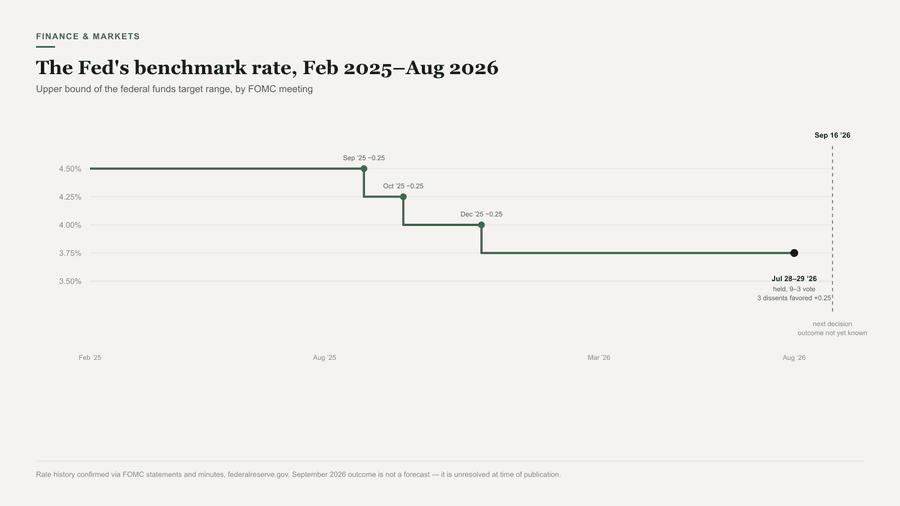
What happens next. Four checkable markers. Buyback operations at the new size begin 9 September and run through 4 November. Treasury has said it will give further detail on future buyback sizes at the 4 November Quarterly Refunding. The FOMC decides on 16 September. And the simplest test of all: whether the 30-year holds above 5.3%.
Sources (15)
- US Treasury: Treasury Announces Increased Sizes of Nominal Long-End Liquidity Support Buybacks Beginning September 9, 19 Aug 2026
- US Treasury GovDelivery bulletin (same release)
- Council on Foreign Relations: What the Treasury's Buyback Surprise Says About the Bond Market
- Axios: Treasury to double down on buybacks to steady bond market, 19 Aug 2026
- CNBC: 30-year Treasury yield tops 5.31%, 17 Aug 2026
- Bloomberg: US Bond Selloff Drives 30-Year Yields to Highest Since 2007, 17 Aug 2026
- CNBC: 30-year Treasury yield tops 5.33%, new 19-year high, 18 Aug 2026
- The Hill: 30-year Treasury bond yield rises to highest level since 2007
- NBC News: Bond yields fall after Treasury announces surprise move to ease rising rates, 19 Aug 2026
- CNBC: Treasury doubles debt buybacks as Bessent moves to steady bond market, 19 Aug 2026
- Bloomberg: Bessent Deploys Debt Buybacks in Sign of Concern Over Yield Rise, 19 Aug 2026
- Bloomberg: US 30-Year Bonds Reverse Gains From Treasury's Buyback Surprise, 20 Aug 2026
- CNBC: Treasury bond buybacks ease long-term yields, but analysts see limited relief, 20 Aug 2026
- CNBC: Treasury yields, bonds, inflation, rates, 21 Aug 2026
- CNN Business: Global bond yields are surging. Here's why it matters
About the author
Muhammad ZahidFounding Editor, BriefLookout
Muhammad Zahid is the founding editor of BriefLookout, an independent publication focused on explaining what happened, what it means, why it matters, and what could happen next. He works across editorial strategy, research, and the systems behind BriefLookout to make complex developments easier to understand.
More from Muhammad Zahid →Related reading
The biggest sanctions package ever aimed at Iran targets an oil trade that has already stopped.
Muhammad Zahid · 24 Aug 2026 · 5 min read
The Fed held rates all year. Its own minutes now show real debate over raising them.
BriefLookout · 21 Aug 2026 · 2 min read
Why the yield curve steepened twice in one week
BriefLookout · 11 Aug 2026 · Updated 12 Aug 2026 · 6 min read