The first mRNA cancer shot just worked in a real trial. The companies didn’t say how well.
Merck and Moderna say their personalized mRNA therapy delayed melanoma’s return in a 1,137-patient Phase 3 trial. They released no results — and the striking numbers now circulating come from a different study one-seventh the size.
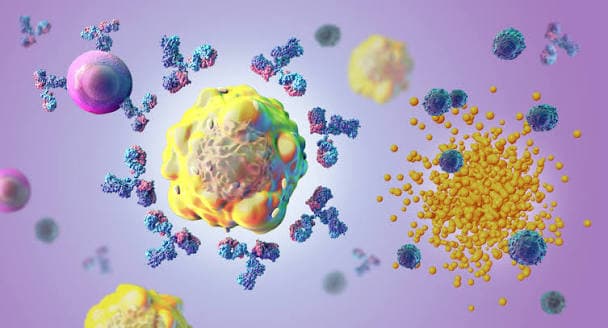
What happened. On 19 August 2026, Merck and Moderna announced that a Phase 3 trial called INTerpath-001 had met its goals. The trial tested intismeran autogene — a personalized mRNA therapy, previously known as V940 or mRNA-4157 — given alongside Merck’s immunotherapy Keytruda, against Keytruda alone.
It enrolled 1,137 adults whose stage IIB, IIC, III or IV skin melanoma had been completely removed by surgery and who had not had prior systemic treatment. The combination beat Keytruda alone on the trial’s primary measure, recurrence-free survival, and on a key secondary measure, distant metastasis-free survival. The companies described both improvements as statistically significant and clinically meaningful, and said the safety picture matched earlier studies with no new warning signs.
This is a real first. No mRNA cancer treatment, and no individualized neoantigen therapy of any kind, had previously succeeded in a randomized Phase 3 trial.
What this treatment actually is. Almost every headline calls it a vaccine. The word is technically defensible and practically misleading.
A vaccine, as most people use the term, is something healthy people receive to avoid getting a disease. This is not that. It is given to people who have already had cancer, after a surgeon has cut the tumor out, to stop it coming back. Nobody is being vaccinated against melanoma.
It is also not one product. After surgery, the removed tumor is genetically sequenced to identify the mutations specific to that cancer. An algorithm selects from them, and a strand of mRNA is manufactured encoding up to 34 of the resulting mutant proteins — neoantigens — for that one person. Injected, it instructs the patient’s own cells to produce and display those markers, so their immune system learns to recognize anything carrying them. Keytruda’s role is complementary: it releases a brake that cancers use to switch immune cells off.
So the accurate description is a personalized, post-surgical immune therapy manufactured individually from each patient’s own tumor. That is a mouthful, which is why “vaccine” persists — but the difference changes who it is for and what it can do.
What the Phase 3 result tells us. The two measures matter differently. Recurrence-free survival counts the time until the cancer returns anywhere, or the patient dies. Distant metastasis-free survival counts the time until it appears in distant organs — the event that usually turns melanoma from survivable into fatal. Hitting both is more persuasive than hitting the first alone.
What it tells us is direction: the combination worked better than the current standard of care. That is the whole of what has been established publicly.
What we still do not know. The size of the benefit. Merck and Moderna released no Phase 3 effect estimates — no hazard ratios, no survival percentages, no absolute numbers. “Met its endpoint” is compatible with an effect that is modest and an effect that is transformative.
This matters because a very quotable figure is circulating: a 49% reduction in the risk of recurrence or death. That number is not from this trial. It comes from KEYNOTE-942, an earlier Phase 2b study whose five-year results were released in January 2026, in 157 patients with high-risk stage III/IV melanoma — a hazard ratio of 0.510, with a 95% confidence interval running from 0.294 to 0.887. A confidence interval that wide, on 157 patients, is exactly the kind of estimate that moves when a larger trial reports. INTerpath-001 is more than seven times the size and includes earlier-stage patients. Its result cannot be assumed to match.
Two further gaps. This was a pre-specified interim analysis, not the final readout. And overall survival — whether patients actually live longer — is still immature; the trial continues to follow it.
There is also no approval. Neither company has announced a regulatory filing, and no regulator anywhere has authorized this therapy.
Why manufacturing is the real test. Every dose is a different product. That inverts how medicine is made, priced and regulated.
A conventional drug is manufactured in batches and shipped. Here, each patient triggers a sequencing run, a computational selection step and a custom synthesis. Every step costs money and, more importantly, takes time — and the clock runs while a post-surgical patient waits. Regulators must approve a process rather than a molecule. Health systems must buy something that has no list price in the usual sense.
None of this is hypothetical difficulty. It is why individualized neoantigen therapy has stayed in trials for a decade despite promising immunology. A Phase 3 win removes the doubt about whether the biology works. It does nothing about whether the logistics scale.
Why it matters beyond melanoma. Intismeran is being tested across the wider INTerpath program — nine Phase 2 and Phase 3 trials spanning melanoma, non-small-cell lung cancer, bladder cancer and renal cell carcinoma. If the approach generalizes, the significance is the platform, not the drug.
But melanoma is the friendliest possible test. It carries an unusually high mutation load, which means an unusually rich supply of neoantigens to target, and it already responds to immunotherapy better than most cancers. Tumors with fewer mutations give the method less to work with. Success here is necessary evidence for the wider program. It is not sufficient.
What happens next. Three checkable things. The companies say detailed data will be presented at an upcoming international medical meeting — that is when the effect size becomes public and this story can properly be judged. They say they will engage regulators about filing; watch for an actual submission, which has not happened. And INTerpath-001 continues, with overall survival the number that ultimately decides whether this changes practice.
Sources (7)
- Merck & Moderna: Phase 3 INTerpath-001 trial of intismeran autogene plus KEYTRUDA met endpoints of RFS and DMFS, 19 August 2026
- Moderna newsroom: the same announcement, 19 August 2026
- Merck & Moderna: five-year KEYNOTE-942 (Phase 2b) data, January 2026 — the source of the 49% / HR 0.510 figures
- STAT: Moderna and Merck say mRNA cancer vaccine succeeded in late-stage melanoma trial
- Fierce Biotech: personalized cancer vaccine slows recurrence in phase 3
- BioPharma Dive: Moderna and Merck cancer vaccine returns landmark result in melanoma
- C&EN: In a first, an mRNA cancer vaccine succeeds in late-stage clinical trial
About the author
Muhammad ZahidFounding Editor, BriefLookout
Muhammad Zahid is the founding editor of BriefLookout, an independent publication focused on explaining what happened, what it means, why it matters, and what could happen next. He works across editorial strategy, research, and the systems behind BriefLookout to make complex developments easier to understand.
More from Muhammad Zahid →Related reading
Your brain's immune cells were supposed to be sealed in for life. In humans, blood cells start joining them at middle age.
BriefLookout · 26 Aug 2026 · 4 min read
Physicists didn't recreate the Big Bang. They caught a nucleus giving away its shape.
Muhammad Zahid · 25 Aug 2026 · 5 min read
NASA's next flagship telescope is launching nine months early. That's the strangest thing about it.
Muhammad Zahid · 24 Aug 2026 · 4 min read