Tesla's Cybercab Is Finally on the Road — And the Hard Part Is Just Starting
A closed-door Austin launch puts Tesla's steering-wheel-free robotaxi in front of paying riders for the first time and starts the clock on regulation, scale, and an unresolved business model.
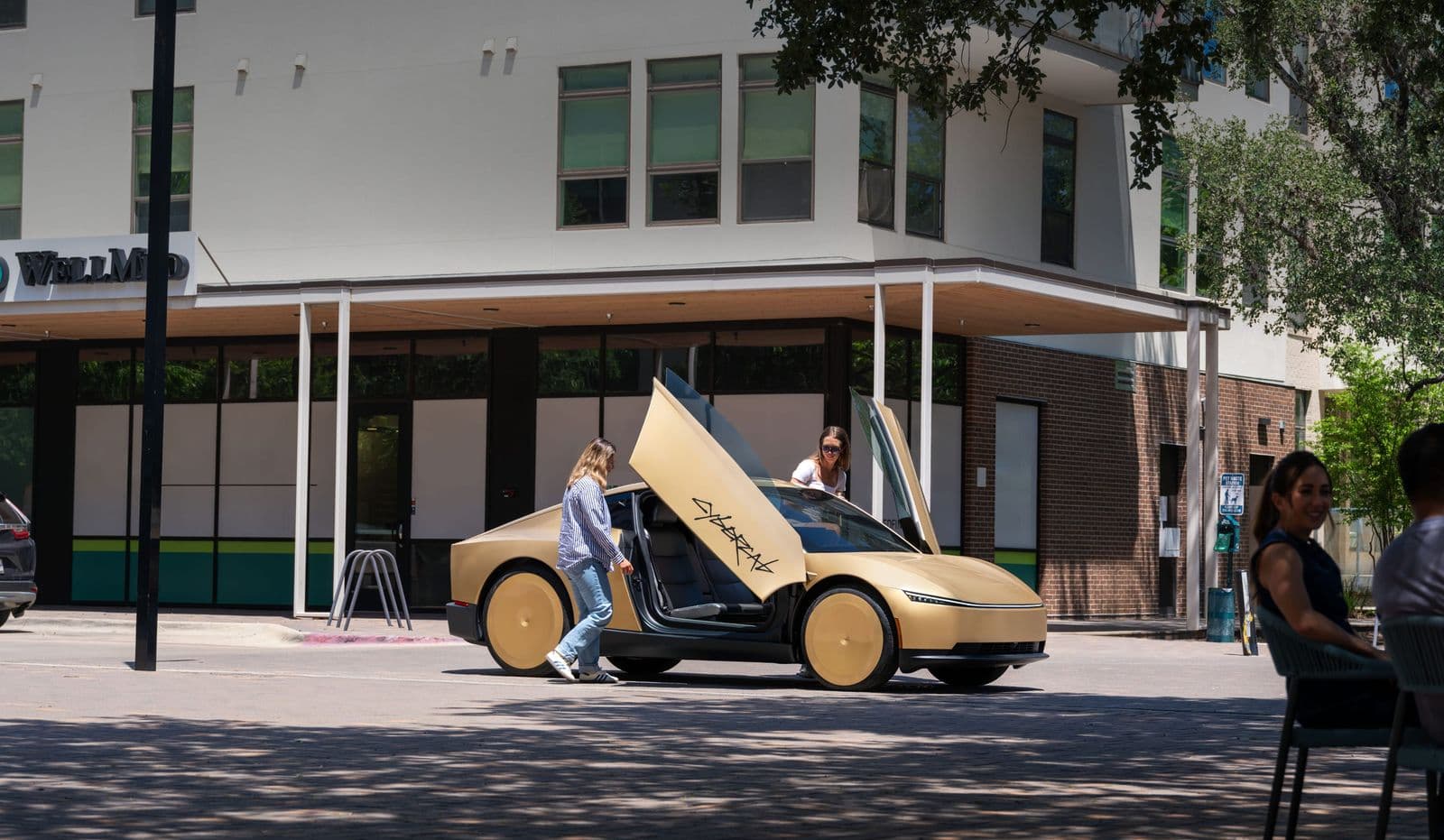
On September 3, 2026, Tesla quietly began charging paying customers for rides in the Cybercab—the first time the two-seat, fully autonomous vehicle has carried anyone other than employees or hand-picked testers. Almost two years after Elon Musk unveiled the car at a splashy Warner Bros. studio event, its actual public debut looked nothing like that: no livestream, no press event, and a fleet limited to roughly 45 authorized vehicles in Austin.
The car itself hasn't changed since the concept reveal in one crucial way: there's still no steering wheel, no pedals, and no manual override of any kind. Every trip runs entirely on Tesla's current AI4 computer and its Full Self-Driving software.
Tesla has blown through self-driving deadlines for years, but this launch changes the nature of the risk, not just the timeline. Earlier robotaxi trials used modified Model Y cars with a trained human sitting behind a working wheel, ready to intervene. That backstop is gone in the Cybercab. If the software makes a mistake, there is no one inside who can correct it—which means Austin's streets are now the real, live test of whether Tesla's autonomy claims hold up outside a demo.
The financial stakes are just as high. Investors have priced Tesla increasingly as a software and ride-hailing company rather than a carmaker, betting that robotaxi fleets and Full Self-Driving subscriptions—not vehicle sales—will become its dominant source of profit. A rollout that scales smoothly reinforces that thesis; visible failures undercut it just as fast, which helps explain why Tesla's stock has moved sharply on Cybercab headlines throughout the year.
Three questions Tesla has avoided answering since 2024 are now impossible to ignore:
- Regulation: Federal and state regulators are watching closely, particularly given a car with no manual controls and a string of prior FSD-related incidents under scrutiny. Political skepticism toward autonomous vehicles has grown too, adding pressure just as Tesla tries to expand.
- Scale: Musk once told investors Tesla was targeting at least 2 million Cybercabs a year across several factories. Today's Austin fleet is a rounding error against that number. Closing the gap requires production ramping up, city-by-city regulatory approval, and software that can operate reliably with zero human fallback.
- Business model: Tesla hasn't said whether it will operate the robotaxi fleet itself, sell cars to owners who rent them out for rides, or run some mix of both. That choice determines who takes on the liability, who collects the revenue, and how fast this can realistically grow.
The biggest danger for Tesla isn't a slow rollout—it's a fast one that outpaces what the technology can actually deliver. Musk has a well-documented habit of promising scale before the safety case is proven, and a fleet expanding from 45 cars toward the millions he's promised gives the software far more opportunities to fail in public, at exactly the moment regulators are watching closest.
There's also a trust problem building quietly in the background. Tesla's silence around the launch—no livestream, no technical detail, no clear numbers—reads very differently depending on how the next few months go. If the Cybercab performs well, the quiet debut will look like discipline. If it doesn't, it will look like a company that knew it wasn't ready to answer questions.
Sources (4)
Related reading
Dyson has put a camera in a toothbrush. Its purpose is to make flossing automatic.
BriefLookout · 6 Sep 2026 · 1 min read
Nvidia is reportedly raising AI server prices 15%. The interesting part is that it has to.
Muhammad Zahid · 25 Aug 2026 · 5 min read
Nvidia has now bought three companies without buying any of them
Muhammad Zahid · 24 Aug 2026 · 5 min read